

Alternatives to Headless Domains
Headless Domains gives AI agents persistent, verifiable web identities for trust and secure machine-to-machine interactions.
Explore 17 alternatives to Headless Domains. Compare features, pricing, and find the best fit for your needs.

BugShield
BugShield fixes WordPress bugs and keeps your site maintained with monitoring, backups, updates, and expert support when something goes wrong.
xDevTools
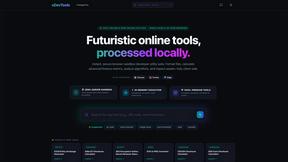
1000+ browser-based developer utilities. Format, encode, hash, and test data locally. No server uploads.
Ornold
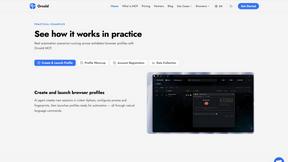
Ornold MCP lets AI agents control Chromium and antidetect browsers: click, type, read screens, record workflows, replay profiles without scripts.
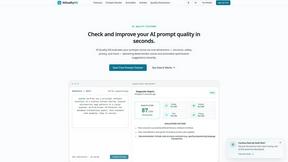
AIQualityHQ
AIQualityHQ instantly evaluates your AI prompts for structure, safety, and privacy in under 10ms with zero API calls.

Context Bolt
Context Bolt provides MCP-native tools that let your AI agents access and search your bookmarks, SEO data, and competitor insights with a single line.
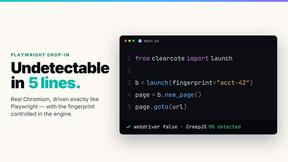
Clearcote
Clearcote is an open-source, de-Googled Chromium drop-in for Playwright and Puppeteer that gives you engine-level fingerprint control for a single.

JustLaunched
JustLaunched helps indie makers schedule product launches, reach buyers, and blast listings across curated SaaS directories.
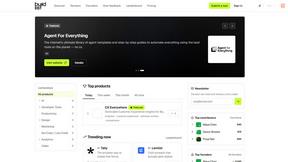
Buildlist
Buildlist instantly creates a comprehensive SaaS directory from any AI API key, helping you discover, launch, and improve the best tools.
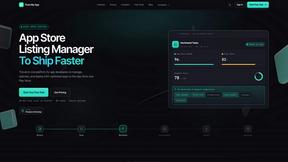
Push My App
Push My App lets developers manage, optimize, and submit ASO-ready listings to both app stores from a single dashboard.
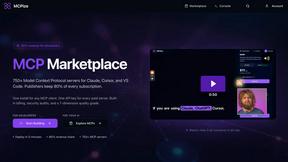
MCPize
MCPize is a marketplace where developers discover and manage 1,000+ premium MCP servers, with publishers earning 80% revenue.
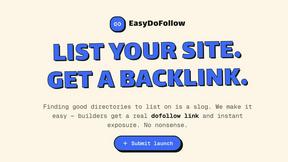
EasyDoFollow
EasyDoFollow simplifies backlink creation by allowing you to list your site and gain a verified dofollow link for enhanced visibility.
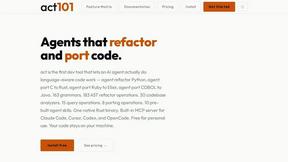
act101
act101 empowers AI agents to refactor and port code seamlessly across 163 languages with advanced AST operations and built-in analysis tools.
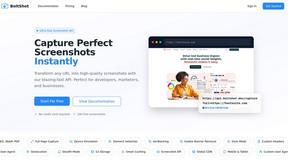
BoltShot
BoltShot is a fast API that instantly captures high-quality screenshots of any URL without browser operations.
ProcessSpy
ProcessSpy is an advanced Mac process monitor with a native interface, real-time filtering, and powerful JavaScript-based analysis.
About Headless Domains Alternatives
Headless Domains is a specialized tool within the Dev Tools category, designed to provide autonomous agents with a persistent, verifiable web identity. Rather than managing traditional domain infrastructure, it allows developers to assign a stable identity to software agents, ensuring they maintain consistent records and can be discovered across different platforms. Users often seek alternatives to Headless Domains for reasons such as evaluating different pricing models, requiring more extensive integration with existing agent frameworks, or needing specific features like enhanced cross-platform reachability or different levels of verifiable record-keeping. When choosing an alternative, it is essential to prioritize solutions that offer identity continuity without proprietary lock-in, robust machine-readable manifests for automated verification, and seamless agent discovery capabilities that align with your development ecosystem. The core function of Headless Domains is to solve the problem of transient agent identities in decentralized and automated environments. When evaluating alternatives, you should focus on the ability to maintain a consistent identity across different sessions and platforms, which is critical for trust and accountability in autonomous systems. Look for options that provide verifiable records and clear, machine-readable manifests that can be easily parsed by other agents or services. Additionally, consider how well the alternative supports cross-platform reachability and whether it offers a clear path for migrating or maintaining identity continuity without creating a dependency on a single vendor or protocol. The ideal solution will balance technical flexibility with the security and persistence required for long-running autonomous operations.
FAQs about Headless Domains Alternatives
What is Headless Domains?
Headless Domains is a developer tool that provides autonomous agents with a persistent, verifiable web identity. It enables agents to maintain consistent records and be discovered across different platforms without being tied to traditional domain infrastructure. The product focuses on solving identity continuity for software agents that operate independently in decentralized environments.
Who is Headless Domains for?
Headless Domains is designed for developers and engineers building autonomous agents, bots, or decentralized applications that require a stable, long-term identity. It is particularly useful for teams working with multi-agent systems where verifiable records and cross-platform reachability are critical. The tool is intended for those who need a machine-readable manifest for agent discovery without the overhead of managing traditional domains.
What are the main features of Headless Domains?
The main features include persistent agent identity, verifiable records, machine-readable manifests, agent discovery, cross-platform reachability, and identity continuity. The product also emphasizes no lock-in, meaning agents can maintain their identity without being tied to a specific platform or provider. These features collectively ensure that autonomous agents can be reliably found, verified, and interacted with over time.
Is Headless Domains secure?
Yes, Headless Domains is built with security in mind, focusing on verifiable records that allow other agents and systems to confirm an agent's identity and history. The use of machine-readable manifests and persistent identity helps prevent impersonation and ensures that records remain tamper-evident. However, the overall security also depends on how developers implement the tool within their own agent architectures and workflows.