

Alternatives to StockFit API
StockFit API delivers clean, standardized financial data from SEC filings, purpose-built for modeling, backtesting, and valuation.
Explore 20 alternatives to StockFit API. Compare features, pricing, and find the best fit for your needs.


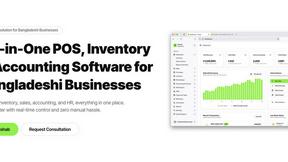
Hishab
All-in-one POS, inventory, accounting and HR software for Bangladeshi SMEs — real-time sales, stock and finance in one place.


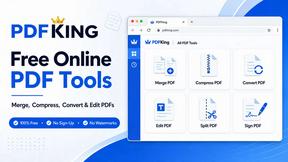
PDFKing
Free online PDF tools to merge, compress, convert, edit, sign, and manage documents—no signup, watermarks, or daily limits.
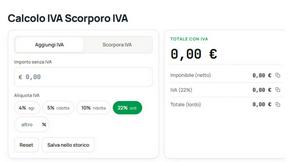
the calcolo iva
TheCalcoloIVA.com helps Italian partite IVA, freelancers, and small businesses calculate VAT, understand tax rules, and stay compliant.

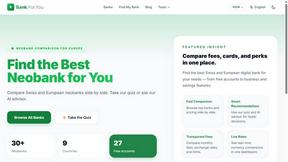
Bank.For.You
Compare Swiss and European neobanks side by side, then use a quick quiz or AI advisor to find your ideal digital bank.

iPulse
iPulse delivers AI-driven market intelligence with precise forecasts, real-time signals, and actionable risk insights for informed decision-making.
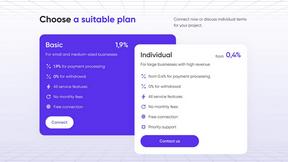
TryBit
TryBit is a crypto payment gateway that lets merchants accept over 40 cryptocurrencies online with low fees and automatic volatility protection.

helpdol
Helpdol uses voice commands to track expenses, scan receipts, and forecast cash flow for small business owners.

Postservice.at
Postservice.at provides a legally valid Vienna business address and virtual office with digital mail scanning, activated in minutes from 49 euros.
About StockFit API Alternatives
StockFit API is a specialized financial data platform that belongs to the business and finance category, designed specifically for developers, quants, and research platforms who need clean, standardized data sourced directly from SEC XBRL filings. This API eliminates the common trade-off between affordable but inaccurate data and expensive enterprise contracts by providing traceable, auditable fundamentals that are ready for modeling and backtesting. Users commonly look for alternatives when they need different pricing structures, require specific coverage for niche asset classes, or seek platforms that offer additional data types like real-time market feeds or alternative datasets not available through SEC filings alone. When evaluating an alternative to StockFit API, you should prioritize data accuracy and traceability, ensuring any replacement also sources numbers directly from original filings rather than derived or estimated values. Consider whether the alternative handles complex scenarios such as amended filings, non-December fiscal years, and Q4 reconstructions from 10-K and 10-Q data, as these are critical for serious financial analysis. Additionally, examine the breadth of coverage, including fundamentals, ownership data, insider transactions, and exposure models for ETFs and mutual funds, along with the frequency of updates and total fact count to ensure the platform scales with your analytical needs.
FAQs about StockFit API Alternatives
What is StockFit API?
StockFit API is a financial data platform built for developers, quants, and research platforms that provides clean, standardized data from SEC XBRL filings. It pulls financial information directly from original filings without any derived middle layer, ensuring every number is traceable and auditable. The platform covers fundamentals, ownership data, ETF and mutual fund exposure, insider transactions, and all types of filings, with over 250 million facts and 5 million filings updated daily.
Who is StockFit API for?
StockFit API is designed for developers, quants, and research platforms who need direct, reliable access to SEC filing data for financial modeling, backtesting, and fundamental analysis. It is ideal for startups and independent researchers who need accurate data without the high costs of enterprise contracts, as well as for larger teams requiring auditable and traceable financial information. The platform is also suited for users working with LLM workflows, as it provides economic models and exposure data in an AI-friendly format.
Is StockFit API free?
Based on the provided product content, StockFit API is not described as a free service. It is positioned as a platform that fills the gap between cheap, inaccurate data tiers and expensive enterprise contracts, suggesting it offers a paid pricing model that provides better value. For specific pricing details, including any free tiers or trial options, you would need to visit the official StockFit API website or contact their sales team.
What are the main features of StockFit API?
StockFit API offers direct access to SEC XBRL filing data with traceable numbers, covering fundamentals, ownership data, ETF and mutual fund exposure, and insider transactions. It handles complex filing scenarios like amended filings, non-December fiscal years, and Q4 reconstructions from 10-K and 10-Q data. Additionally, it provides rich economic models per company, including offerings, peers, operating levers, competitive advantages, and failure modes, as well as ETF and mutual fund exposure models detailing mandate, portfolio construction, costs, and sensitivities.