

Alternatives to ProcessSpy
ProcessSpy is an advanced Mac process monitor with a native interface, real-time filtering, and powerful JavaScript-based analysis.
Explore 20 alternatives to ProcessSpy. Compare features, pricing, and find the best fit for your needs.

Egmatic
Egmatic is a no-code editor for 2D games that takes a project from first scene to published build, with no backend work.


stackledge
A human-verified discovery hub for founders. Find dependable SaaS tools, practical AI apps, and custom n8n workflows without enterprise bloat.

TrueProxies
Residential and datacenter proxy provider with 50M+ ethically sourced IPs across 150+ countries. Unlimited from $4.08/hr, pay-per-GB from $1.64/GB.

Product Launch Checklist
A free launch checklist for SaaS, apps, AI tools and more. Every step says why it matters and when you can skip it.

Forms Plugin
The #1 Native Form Builder Plugin for Framer - No Code, No Embeds, No External Platforms.

Chatit Me - Free Random Chat Alternative
Chat with random strangers online for free on ChatIt.me. Enjoy safe, anonymous, and instant 1-on-1 conversations with people worldwide


BugShield
BugShield fixes WordPress bugs and keeps your site maintained with monitoring, backups, updates, and expert support when something goes wrong.


xDevTools
1000+ browser-based developer utilities. Format, encode, hash, and test data locally. No server uploads.

Ornold
Ornold MCP lets AI agents control Chromium and antidetect browsers: click, type, read screens, record workflows, replay profiles without scripts.

AIQualityHQ
AIQualityHQ instantly evaluates your AI prompts for structure, safety, and privacy in under 10ms with zero API calls.

Context Bolt
Context Bolt provides MCP-native tools that let your AI agents access and search your bookmarks, SEO data, and competitor insights with a single line.
Clearcote
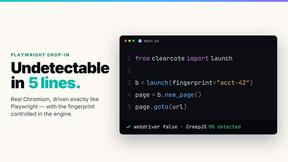
Clearcote is an open-source, de-Googled Chromium drop-in for Playwright and Puppeteer that gives you engine-level fingerprint control for a single.

JustLaunched
JustLaunched helps indie makers schedule product launches, reach buyers, and blast listings across curated SaaS directories.

Buildlist
Buildlist instantly creates a comprehensive SaaS directory from any AI API key, helping you discover, launch, and improve the best tools.

Push My App
Push My App lets developers manage, optimize, and submit ASO-ready listings to both app stores from a single dashboard.

MCPize
MCPize is a marketplace where developers discover and manage 1,000+ premium MCP servers, with publishers earning 80% revenue.

EasyDoFollow
EasyDoFollow simplifies backlink creation by allowing you to list your site and gain a verified dofollow link for enhanced visibility.
About ProcessSpy Alternatives
ProcessSpy is an advanced process monitoring and exploration tool designed specifically for macOS, falling into the category of developer and power-user utilities. It serves as a native alternative to well-known Windows tools like Sysinternals Process Explorer, providing deep visibility into the macOS operating system. The application goes beyond the capabilities of the built-in Activity Monitor, allowing users to visualize hierarchical process trees, inspect open files and sockets, view environment variables, and forcefully terminate unresponsive applications. Users may seek alternatives to ProcessSpy for various reasons, including budget constraints, specific feature requirements not covered by the tool, or a need for cross-platform compatibility. Some individuals might prefer a free or open-source solution, while others could be looking for a tool with a different user interface or additional diagnostic capabilities like network monitoring or real-time performance graphs. When evaluating alternatives, it's crucial to consider the depth of system information provided, the tool's stability and security, its ease of use for your specific tasks, and how well it integrates into your existing workflow for managing and troubleshooting macOS processes.
FAQs about ProcessSpy Alternatives
What is ProcessSpy?
ProcessSpy is an advanced process monitoring and exploration tool built exclusively for macOS. It is designed as the native Mac counterpart to utilities like Sysinternals Process Explorer for Windows. The application provides deep, granular visibility into system and application processes that the standard macOS Activity Monitor application does not show, making it a powerful utility for developers and system administrators.
Who is ProcessSpy for?
ProcessSpy is primarily designed for developers, power users, and IT professionals who need to manage and troubleshoot software on macOS. It is ideal for anyone who requires a deeper understanding of running processes, their dependencies, and their resource usage than what is available through the standard Activity Monitor. This includes diagnosing application hangs, inspecting environment variables for development, or forcefully managing stubborn background processes.
What are the main features of ProcessSpy?
The core features of ProcessSpy include the ability to visualize detailed process trees, showing the hierarchical relationship between applications and their child processes. It allows users to inspect the open files and network connections associated with any process. Additionally, it provides access to view environment variables and offers the capability to instantly kill unresponsive or problematic applications that cannot be closed through normal methods.
Why choose ProcessSpy over the built-in Activity Monitor?
You would choose ProcessSpy when the standard Activity Monitor lacks the detailed information you need for advanced troubleshooting. ProcessSpy reveals hidden data such as full process hierarchies, specific open files, and environment variables, which are crucial for development and deep system analysis. Its ability to forcefully terminate stubborn processes also provides a level of control that goes beyond the standard macOS force quit functionality.