

Ember
Ember locks daily AI market calls before outcomes, tracking real-money divergence to reveal where the crowd is wrong.
product Details
Explore More
Alternatives
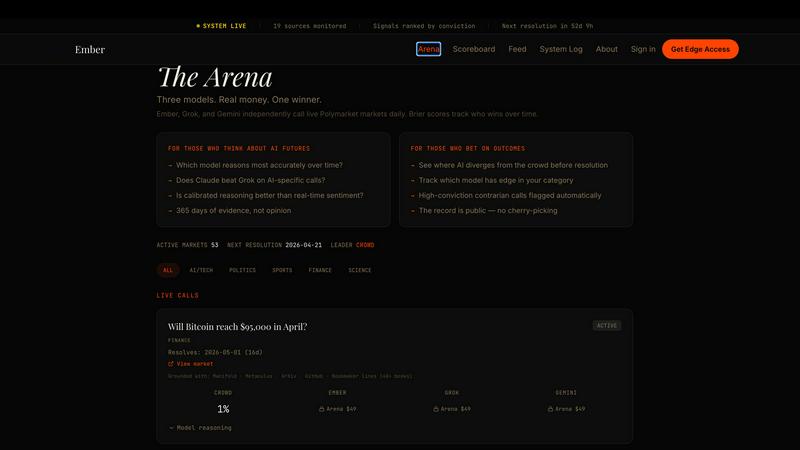
About Ember
Ember is a public AI prediction engine built on a radical premise: an AI that won't show its work isn't worth trusting. Designed for traders, analysts, researchers, and anyone who wants to see where machine intelligence diverges from real-money markets, Ember operates as a daily, transparent, and auditable system. Every morning at 7:00 AM EST, three genuinely independent AI models — Claude by Anthropic, Grok by xAI, and Gemini by Google — independently call live Polymarket markets before they resolve. These models do not consult each other. When any model's probability diverges from the crowd by 10 or more points, that divergence is flagged as a high-conviction signal. Every call is timestamped before the outcome is known, and accuracy is tracked using Brier scores, a calibration metric that rewards both accuracy and confidence. Nothing is edited after the fact. Every wrong call receives a post-mortem analysis. The record builds in public over a full 365-day cycle. Ember is not a black box. It is a proof layer that shows you exactly what three leading AI systems thought, when they thought it, and whether they were right. The core value proposition is simple: when the AI splits from the market, that is where the edge lives. Subscribers see the signals at 7:00 AM EST before public release, giving them a timing advantage. Ember is for anyone who wants to leverage AI reasoning to find mispriced probabilities in prediction markets, sports odds, and emerging technology events.
Features
Three Independent AI Models
Ember forces three fundamentally different AI models to call live Polymarket markets independently every morning. Claude reasons carefully from first principles, synthesizing prediction markets, bookmaker lines, and AI research feeds. Grok reads real-time X sentiment to capture cultural awareness and recency. Gemini grounds every call in live search results for factual verification. They do not consult each other. When they agree, that is noted. When they disagree, that divergence becomes the signal. This multi-model approach eliminates single-source bias and provides a richer, more nuanced picture of market probabilities.
High-Conviction Divergence Flagging
The system automatically flags any call where an AI model's probability diverges from the Polymarket real-money crowd by 10 or more points. This threshold represents a high-conviction signal that either the crowd is wrong or the AI is wrong. The record shows which. This feature allows users to quickly identify the most significant discrepancies between machine intelligence and market sentiment, focusing attention on the opportunities where the potential edge is largest.
Immutable Record and Public Accountability
Every call is timestamped before the outcome and locked forever. Nothing is edited. Nothing is deleted. Accuracy is tracked using Brier scores, a calibration metric that rewards both accurate probability estimates and appropriate confidence levels. Every wrong call gets a public post-mortem analysis. The record builds transparently over a full 365-day cycle, allowing users to track which model beats the crowd most consistently. This feature ensures complete accountability and builds trust through radical transparency.
Comprehensive Intelligence Stack
Before making any call, Ember synthesizes data from over 20 sources across the system. This includes real-money markets like Polymarket, Manifold, and Metaculus (volume-filtered at 10k or more), live sports odds from 40 plus bookmakers via The Odds API, AI research feeds from arXiv, Hugging Face, and major AI labs, and emerging product intelligence from Product Hunt, Hacker News, and GitHub Trending. This broad intelligence stack ensures each model has a rich, multidimensional view of the information landscape before making its independent call.
Use Cases
Identifying Mispriced Prediction Markets
Traders and analysts can use Ember to spot prediction markets where the crowd's probability significantly differs from AI model assessments. For example, when Ember assigns a 40 percent probability to an event while the Polymarket crowd prices it at only 4 percent, that 36 point divergence signals a potential mispricing. Users can investigate further, assess the AI's reasoning, and decide whether to take a position before the market corrects. The timestamped record provides confidence that the signal was generated before the outcome.
Validating AI Research and Technology Bets
Researchers and investors in AI and technology can use Ember to track predictions about model performance, product launches, and research milestones. For instance, when the system calls markets like "Will xAI have the best AI model at the end of April 2026?" or "Clavicular pregnancy in 2026?", users gain insight into how leading AI models assess their own and competitors' trajectories. This provides a unique, machine-generated perspective on technology forecasting that complements human analysis.
Enhancing Sports Betting Strategies
Sports bettors can leverage Ember's synthesis of live bookmaker lines from 40 plus books worldwide. By seeing how AI models independently assess sports probabilities before public release, users can identify discrepancies between bookmaker odds and machine intelligence. The divergence flagging system highlights the most significant gaps, helping bettors focus on opportunities where the AI's probabilistic reasoning suggests the market may be mispriced.
Conducting Post-Mortem Analysis of AI Performance
Researchers, analysts, and AI enthusiasts can use Ember's public record to study how different AI models perform over time. The Brier score tracking and post-mortem analyses for every wrong call provide rich data for understanding the strengths and weaknesses of each model. Users can examine which types of questions each model handles best, how recency bias affects Grok versus factual verification in Gemini, and how Claude's first-principles reasoning compares. This use case is valuable for anyone studying AI calibration, prediction methodology, or model comparison.
Frequently Asked Questions
What makes Ember different from other prediction platforms?
Ember is unique because it uses three genuinely independent AI models that do not consult each other, forces them to call live Polymarket markets before resolution, and publicly tracks every call with immutable timestamps. No other platform provides this level of transparency, accountability, and multi-model divergence analysis. The 365-day public record, Brier score tracking, and post-mortem analyses for every wrong call create a level of trust and auditability that is unprecedented in AI prediction tools.
How are the AI models chosen and why these three?
Ember uses Claude by Anthropic for careful, first-principles reasoning and deep AI domain knowledge. It uses Grok by xAI for its ability to read real-time X sentiment and capture cultural awareness and recency. It uses Gemini by Google for search-grounded factual verification. These three models represent fundamentally different approaches to reasoning: synthetic analysis, social sentiment, and factual grounding. This diversity ensures that when they disagree, the divergence is meaningful and informative, rather than reflecting shared biases.
When are the calls published and who can see them?
Calls are published daily at 7:00 AM EST. Subscribers see the signals immediately at that time. Public release follows later. The edge is timing. Every call is locked before the outcome with a timestamp, and no edits or deletions are ever made. This ensures that subscribers have a genuine timing advantage while maintaining a complete public record for accountability.
How is accuracy measured and verified?
Accuracy is measured using Brier scores, a standard calibration metric that rewards both accurate probability estimates and appropriate confidence levels. A lower Brier score indicates better calibration. Every call is timestamped before the outcome, so there is no possibility of after-the-fact adjustment. The record builds publicly over 365 days, and the model that beats the crowd most consistently across the entire cycle wins. Every wrong call receives a public post-mortem analysis, ensuring complete transparency.
Similar to Ember
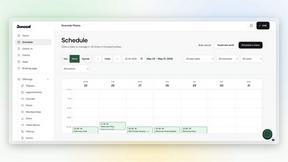

the calcolo iva
TheCalcoloIVA.com helps Italian partite IVA, freelancers, and small businesses calculate VAT, understand tax rules, and stay compliant.
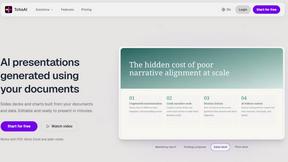
TchoAI
Turn documents, notes, and data into clear, editable presentations in minutes.
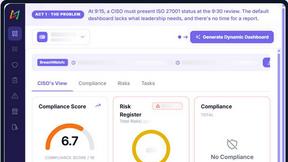
Bullynx
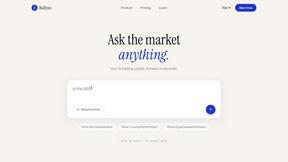
Upload any chart or ask any market question and get a clear, honest read in seconds.
Bank.For.You
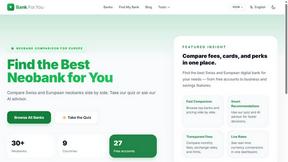
Compare Swiss and European neobanks side by side, then use a quick quiz or AI advisor to find your ideal digital bank.